
Presenting the Budget for 2019-20 in the Lok Sabha, Finance Minister Piyush Goyal also said Rs 35,000 crore has been given under the One Rank One Pension scheme in the last three years.
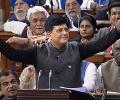
The interim Budget has attempted to tick all the boxes that could help the Modi government return to power, reports Archis Mohan.

Several critics including some rating agencies have doubted prospects of meeting this ambitious fiscal deficit target.

With Mamata Banerjee leaving passenger fares untouched and announcing a slew of concessions for technicians of regional film industry, cancer patients and press correspondents, railways' earnings from passenger operations may be strained further.


The railways have been able to project improvement in finances.

The economic growth slowed to 6.9 per cent in the second quarter against 8.4 per cent in the same period last year.

Foreign Office spokesperson Mumtaz Zahra Baloch during her briefing on Friday was asked to comment on the successful soft-landing of the Chandrayaan-3 mission on the Moon.

The government may be staring at a modest slippage in fiscal deficit for 2022-23 (FY23), with the Ministry of Finance seeking parliamentary approval for additional spending through a second and final tranche of supplementary demands for grants. On Monday, as the Budget session of Parliament resumed, Finance Minister Nirmala Sitharaman sought Parliament approval for additional gross spending of Rs 2.7 trillion in FY23 (which ends on March 31). While net cash outgo is pegged at Rs 1.48 trillion, the rest will be matched by savings or enhanced receipts, the finance ministry said.

'If because of El Nino, the monsoon is affected adversely in the current year, naturally it will affect income projections and consequently Budget numbers.'

Over 60 per cent of these borrowings are slated to be mopped up in the festival season.
More services such as ATM operations are proposed to be brought within the service tax net.

Prime Minister Narendra Modi's announcement of providing free inoculation to all adults will entail total spending of anywhere between Rs 45,000 crore and Rs 50,000 crore. This is higher than Rs 35,000 crore that the government had budgeted.

Ahead of India's annual budget presentation next week, IMF's chief economist Gita Gopinath has favoured the extension of the pandemic support measures, thrust on investment in infrastructure and expanding health sectors programmes like Ayushman Bharat, and a very credible divestment path for commercially viable companies. The Indian government has provided a lot of schemes for small and medium enterprises, most of which is in the form of liquidity support, Gopinath told PTI on Tuesday. "And you want to revisit it and see how effectively that is working and see whether additional support may need to be provided," she said while responding to a question on her recommendations to Finance Minister Nirmala Sitharaman, ahead of her presentation of the annual Union Budget on February 1. It would be a good time for banks and Non-Banking Financial Companies (NBFCs) to raise capital given the attractiveness of financing conditions at this point, she said.

While the likelihood of these states going the Lanka or Greece way may be an alarming assessment, the financial situation of some states such as Punjab and West Bengal is indeed quite weak.
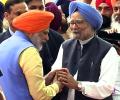
Whether it was the MGNREGS or the NFSA or the Aadhaar-based DBT scheme for cash transfer, the Modi government has built on the basic architecture created by the Singh government. Policy makers in the Modi government, instead of discarding them as products of the previous political regime, worked on them, expanded their scope and reach, and used new tools to improve their performance, explains A K Bhattacharya.
'It is entering growth territory on a month-on-month basis.'
The government on Monday sought Parliament approval for gross additional expenditure of Rs 44,945 crore in the current financial year. Of this, the net cash outgo will be Rs 19,812 crore, while the rest will be met by savings of the ministries or enhanced receipts. A significant part of this additional grant would be spent on food and fertiliser subsidy.
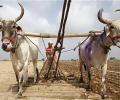
Agri experts are meeting FinMin ministry officials on Monday to give their inputs on the Budget.

If this Budget was not packaged and sold as a Budget for the poor and for farmers, Narendra Modi would have lost the next election.

'If the Chinese intent is to be gauged based on its aggression in the South China Sea, greater forays in the Indian Ocean, a hawk's attitude towards Taiwan, flying its fighters repeatedly over the Senkaku islands in the East China Sea and creating strategic assets globally, there would be a requirement for strategic partnerships for India,' says Brigadier S K Chatterji (retd).
The worst of recession could coincide with the run-up to the elections.
The Individual tax payer exemption limit to be raised to Rs 200,000 from Rs 180,000.
Capex for next year expected to be up 25% to Rs 3 lakh crore

The additional outgo to combat the impact of COVID-19 will significantly erode the fiscal consolidation achieved by the state governments in the past three years, an RBI report said on Tuesday. In its study of the state budgets of 2020-21, the RBI report which has dwelled on the theme 'COVID-19 and its Spatial Dimensions in India', said that Gross Fiscal Deficit (GFD) of the states would spiral during the current fiscal.

The Union Budget seems to have elicited a starkly opposite view from rural India compared to urbanites, says Mahesh Vyas.
The new government may enhance the Plan expenditure for 2014-15 by around Rs 11,000 crore (Rs 110 billion) in the Budget next month, which would be about 2 per cent higher than what was provided in the previous fiscal budget.
Let there be a rule that if the Budget is not passed and funds cannot be drawn from the Consolidated Fund of India, there will be a government shutdown as it happens in the United States, says A K Bhattacharya.

Arun Jaitley opted for a fiscal deficit of 3.9% in 2015-16.

The net direct tax collections jumped by 18 per cent to Rs 43,391 crore during the first two months of the current fiscal.

The new government, which will be required to boost investments and promote growth, will be presenting a regular Budget after completion of the electoral process.

The Centre's capital expenditure (capex) outlay for the April-June quarter (first quarter, or Q1) of 2022-23 (FY23) could be close to Rs 1.5 trillion, Business Standard has learnt. As a percentage of full-year capex Budget Estimates (BE) of Rs 7.5 trillion, this could be at similar levels to the trends in the past few fiscal years. It is in the July-September quarter (Q2) of FY23 that capex is expected to pick up, when a bulk of the long-term capex loans to states are expected to be expended.

'Let us hope that this Budget delivers.' 'It needs 10 per cent plus real GDP growth in 2021-22, the rebound year,' notes Omkar Goswami.

There is a lot of optimism as regards the defence, railway and manufacturing sectors.

The rating agency also expects merchandise exports to grow by 8-10 per cent in the next fiscal year.
